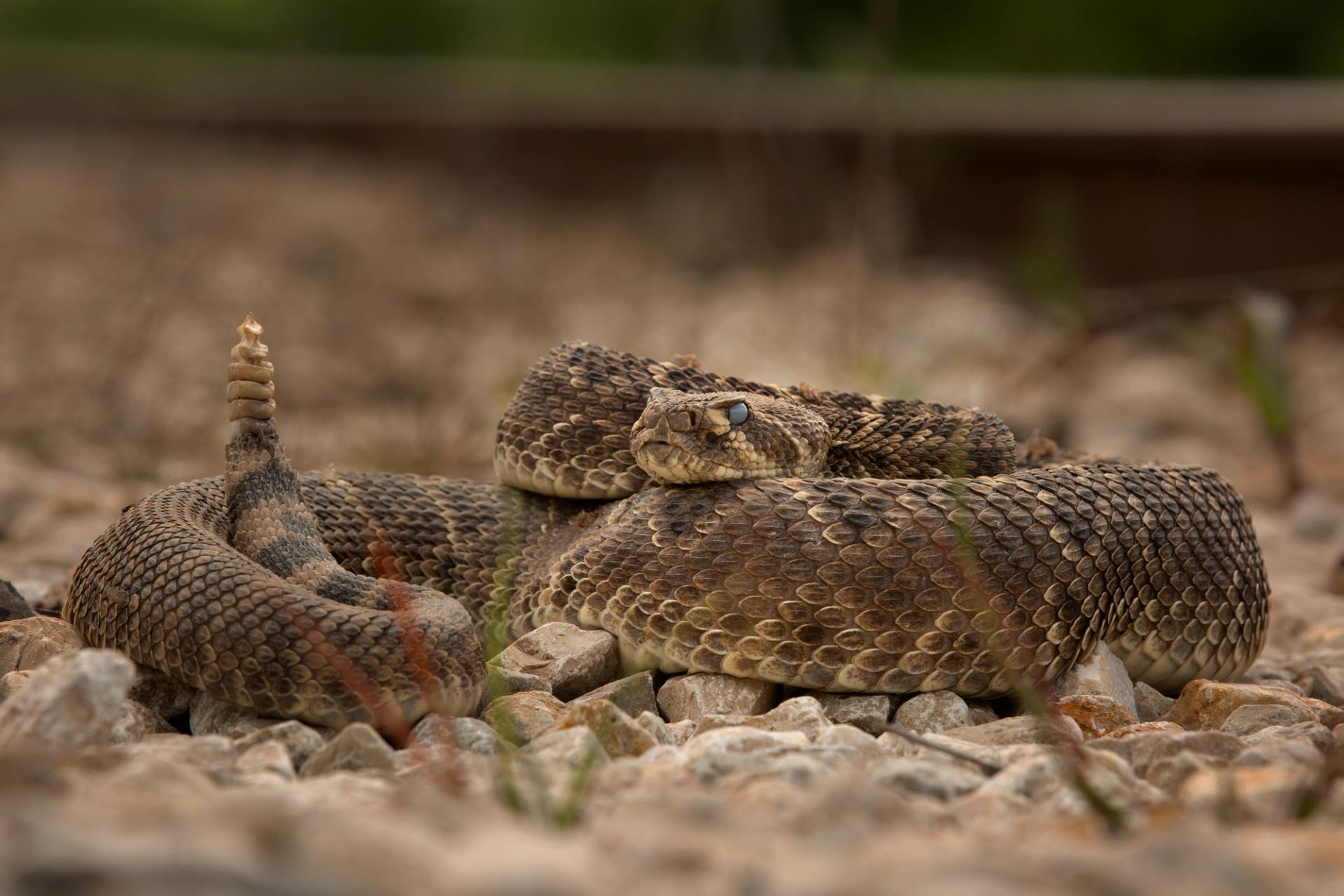
Be careful this summer: you might find an unwelcome reptile outdoors. Rattlesnakes are most active during the summer months. Here are a few tips to keep you and your pets safe when out on the trails.
🐍 About Rattlesnakes
Rattlesnakes are part of the viper family, which accounts for nearly 99% of snake bites in the United States. According to Houston Audubon, the western diamondback is the most common and the largest in the Houston area. Because it looks for food during the day, it’s more likely to be spotted than other rattlers. The good news: They’re actually not that common in Houston, though you may spot one in an outlying area or near a farm building.
Myth busting: Rattlesnakes are actually quite timid unless provoked. Their primary defense is to hide, followed by a rattle to fend off potential predators. Biting is a last resort.
⚠️ How to Stay Safe
- Wear over-the-ankle boots and long pants.
- Stay vigilant on hikes.
- Snake encounters can occur anywhere outdoors, but the chances are higher the further you are from a trail.
- If you see a snake, alert other people in the area.
- Dogs are curious by nature, so always keep them on a leash.
🏥 Treating a Bite
Rattlesnake bites can be extremely painful and potentially deadly if left untreated. The two most important steps to take if you’re bitten are to get away from the snake and seek medical attention as quickly as possible. Below are some tips on what to do between the bite and receiving medical assistance.
- Anxiety and panic will raise your heart rate, potentially aiding venom spread. If you or someone around you are safely able to, take a picture of the snake. This could help speed up medical assistance.
- Remove any constricting items of clothing around the area (pants, socks, jewelry, etc). Place the affected area in a neutral and comfortable position. Increased movement will help the venom spread faster.
- Do not raise the affected area above your heart. The venom will make its way towards your heart faster. And don’t use a tourniquet, either. Let the wound bleed, then apply a bandage around it without constricting.
City Cast Houston Executive Producer Laura Isensee contributed to this article.