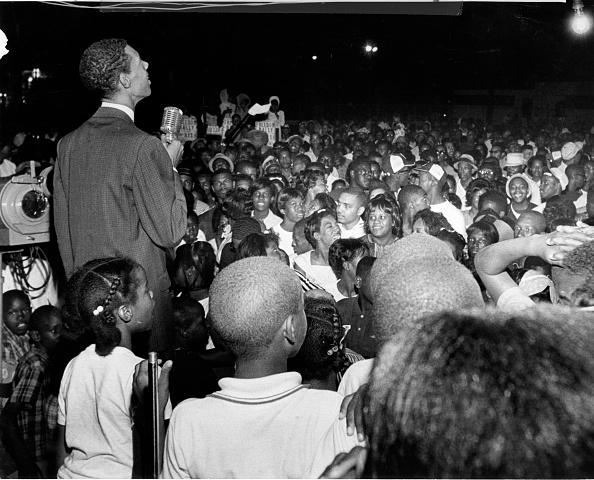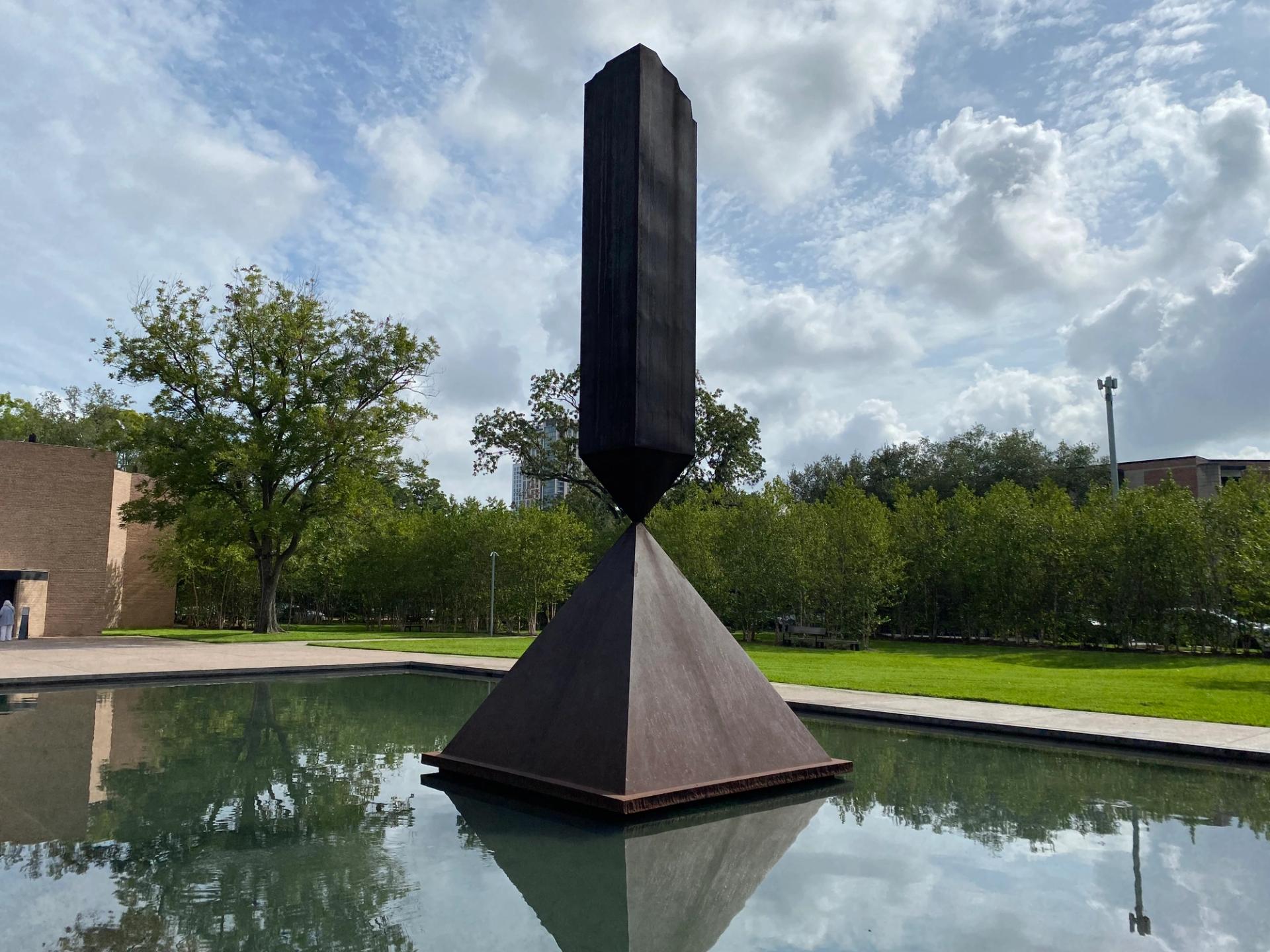
For today’s history spotlight, in honor of Dr. Martin Luther King Jr, I want to focus on "Broken Obelisk," a sculpture outside of Rothko Chapel in Montrose.
John and Dominique de Menil, art patrons and founders of the Menil Collection, fawned over the “Broken Obelisk” by sculptor Barnett Newman when it was installed in New York City for a temporary exhibition. In 1969, the Menils offered to buy the sculpture for the city of Houston, matching a $45,000 federal grant. But they had a special request: Following Martin Luther King's assassination, the Menil family asked that it be placed outside Houston City Hall and dedicated to King. They wanted the sculpture to be inscribed, “Forgive them for they know not what they do,” a scripture from the Bible that Dr. King used in a sermon to describe forgiveness.
However, the city refused to accept the dedication. One councilman told the Houston Chronicle, “People who come down here don’t understand these arty objects. We would be better off with a nice drinking fountain out there.” So the Menils bought the sculpture themselves, and placed it in front of the Rothko Chapel in 1971. The couple said the sculpture reflected King’s life cut short as the obelisk’s top is broken off. Today, you can still visit the sculpture in front of the Rothko Chapel and remember the rich legacy of Dr. King.
Want to see how MLK's legacy is impacting Houston's younger generation? Houston ISD fourth and fifth grade students delivered speeches on Friday at Foley's Annual MLK Jr. Oratory Competition based on this prompt: "What would Dr. King tell us about our responsibility as citizens and leaders in America today?" Montoia Murray, a fifth grader at Blackshear Elementary school, delivered the winning speech.