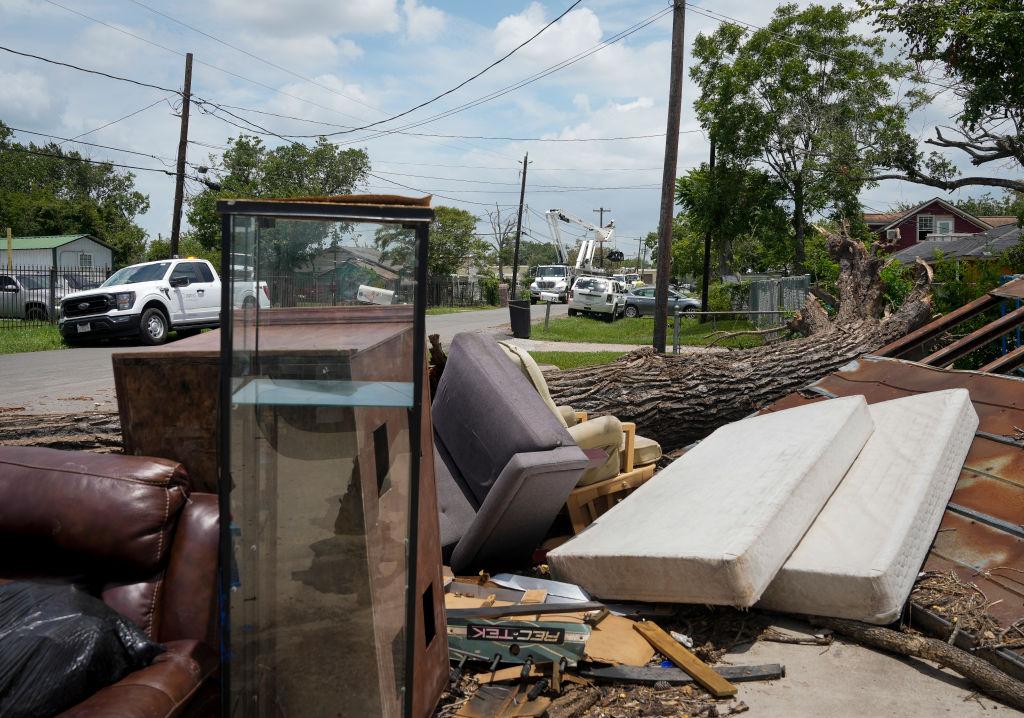
After Hurricane Beryl hit on July 8, more than 2.2 million Houstonians were left without power and at least 13 people died. The storm also left up to $3.5 billion in property damage because of high winds. And the total economic loss from the storm in the United States could reach $32 billion! But when Beryl made landfall in Houston, it was a Category 1 hurricane, the weakest category possible. So, why did it cause so much damage?
The High Winds
As Hurricane Beryl was making its way closer to Houston, its wind speeds began to intensify. Eric Blake, a forecaster at the National Hurricane Center, said that if Beryl had stayed in the Gulf of Mexico six more hours, then it could’ve progressed to a Category 2 hurricane. Once the storm made landfall, it took a while for its momentum to slow down, causing high wind speeds. Lake Jackson, Angelton, Baytown, La Porte, and Alvin all saw wind gusts over 100 mph. Bush and Hobby Airports also reported wind gusts above 80 mph.
It’s important to remember that even tropical-storm force winds, which can range from 60 mph to 95 mph, can rip off roofs and blow out windows at houses with poor or average construction, according to the National Weather Service. Those wind speeds can also result in numerous power outages with downed wires and power poles. Meanwhile, hurricane force winds that range from 74 mph to 110 mph can blow out glass in high-rise office buildings and uproot trees. Another important factor: Houston was also on the dirty side of Hurricane Beryl, known as the right side, which sees more extreme winds.
What Can We Learn?
Hurricane Beryl’s financial damage for Houston is expected to be less than Hurricane Ike and Hurricane Harvey – but we still learned how much damage even a Category 1 hurricane can cause. So, where do we go from here?
No matter the category of a hurricane, prepare for the worst case scenario:
Even if a storm is only classified as a tropical storm, it can still cause significant damage. In 2001, Tropical Storm Allison left Houston with significant damage and more than 40 inches of rainfall. In 2017, came Hurricane Harvey. Once it moved towards Houston, it had weakened to a tropical storm. But Harvey still managed to dump 4.5 feet of rainfall over four days.Be prepared for widespread power outages:
As we’ve seen with the rare derecho in May and Beryl in July, Houston will experience widespread power outages during high wind storms. Make a power outage plan before the storm happens: buy non-perishable food items, portable chargers, and other items you’ll need. If possible, consider buying a generator and use these tips for choosing the right one.Pay attention to the forecast during hurricane season:
Hurricane season lasts until Nov. 30. Before Beryl, some of us were caught up with our Fourth of July plans and not paying attention to Beryl’s track, which changed unexpectedly only a few days before landfall. Pay attention to local meteorologists, Space City Weather, and sign up for emergency alerts, so you’re not caught off guard.
I also enjoyed these lessons from Hurricane Beryl from Mike Iscovitz, chief meteorologist at Fox 26 Houston.